Play connects directly to the radio server radiokos.radioca.st and shares your IP address with the provider. Navigating to another page stops playback.
Places bring us closer. People give the map meaning.
Bletaria begins with Albanian-speaking beekeepers and their connections to the places where they live. We want to discover apiaries, local place names, family recipes and the many forms of hospitality.
Our map puts landscape and producers at its centre. A point represents a documented business or place. Communities and cultural stories are explored through their own accounts and sources.
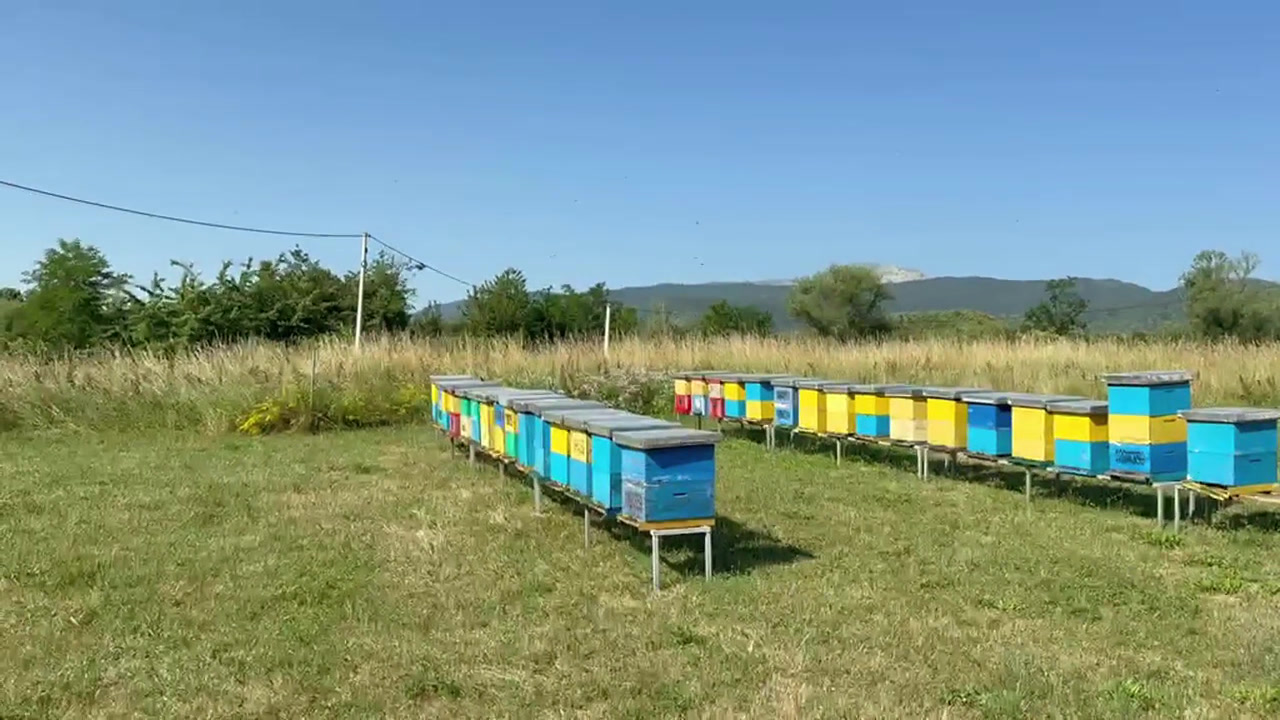
From the Bletaria Genti photo collection. A place is more than a coordinate.
01 · Living languages
Near and far. In their own voices.
A culture lives in the people who speak it, remember it and reshape it. Bletaria makes room for communities with different histories, names and ways of describing themselves.
Pejë · Shkodër · Tetovë · Ulqin · Preshevë
The voices of our places
A village name, a spring harvest, a Saturday market. These are the stories we want to fill our atlas with, through beekeepers and people who know their places first-hand.
Italy’s Arbëreshë communities preserve a historical Albanian language tradition. Albanian is among Italy’s recognised historical minority languages. Council of Europe ↗
We invite producers and local associations to contribute their village’s Arbëresh name, an apiary story and a recipe worth preserving.
Arvanitika · Greece
The Arvanites
Linguistics describes Arvanitika as a historical Tosk Albanian variety in Greece. Its speakers’ language and self-identification deserve to be heard in their own context. Cambridge University Press ↗
A story can arrive in the language its author chooses, with the names and memories they wish to share.
Arbanasi · Zadar · Dalmatia
Zadar’s Arbanasi
The University of Zadar documents the Arbanasi language and cultural tradition after their settlement in Croatia in the early eighteenth century. This is a documented connection between Albanian linguistic heritage and Dalmatia. University of Zadar ↗
Community voices can contribute stories, place names and present-day connections to crafts and local food.
Diaspora
A jar that travels
For many families, a product from home is also a memory. We welcome diaspora beekeepers who describe their own connection to the community, wherever they live and wherever their hives are.
Iapygians, Messapians and Dalmatians open a window onto the ancient Adriatic world. Messapic is known through inscriptions; its linguistic position and relationships remain subjects of research. Proposed links with the ancestors of Albanian should be presented as research questions rather than an assigned present-day identity. Palaeohispanica · Messapic ↗
This atlas gives such questions a home in its culture section. The producer map features present-day apiaries with traceable information and connections described by the producers themselves.
03 · A day in a place
Honey. A table. A reason to stay.
A beekeeper visit can be the start of a lovely day. Around apiaries we want to gather local recommendations for places to stay, food, walks and other producers, with confirmed contacts and details.
01
Before you set off
Ask the beekeeper about visiting times, available products and whether visits are possible. Check the final approach, parking and language. A quick call helps make the meeting easier.
02
At the table
Look for a place serving local food and ask who produces the ingredients. In time, we want home-produced cheese and olive oil to have their own stories and producers at Bletaria.
03
Stay a little longer
If you extend your visit, ask about a nearby stay, a walk and a tip that rarely makes it into a guidebook. We will publish recommendations once the contact and offer are confirmed.
Bees connect the landscape too.
Bees and other pollinators help many plants reproduce. FAO highlights their importance for ecosystems and food production. Meeting a beekeeper is also a chance to notice more of what flowers around us. FAO · Pollination ↗
The atlas grows with you
Tell us about your place.
An apiary, a local name, a family memory or a place to visit: send a description, photographs and your information source to info@bletaria.com.